What Is Instrumentation? A Practical Guide for Industrial Plant Operations
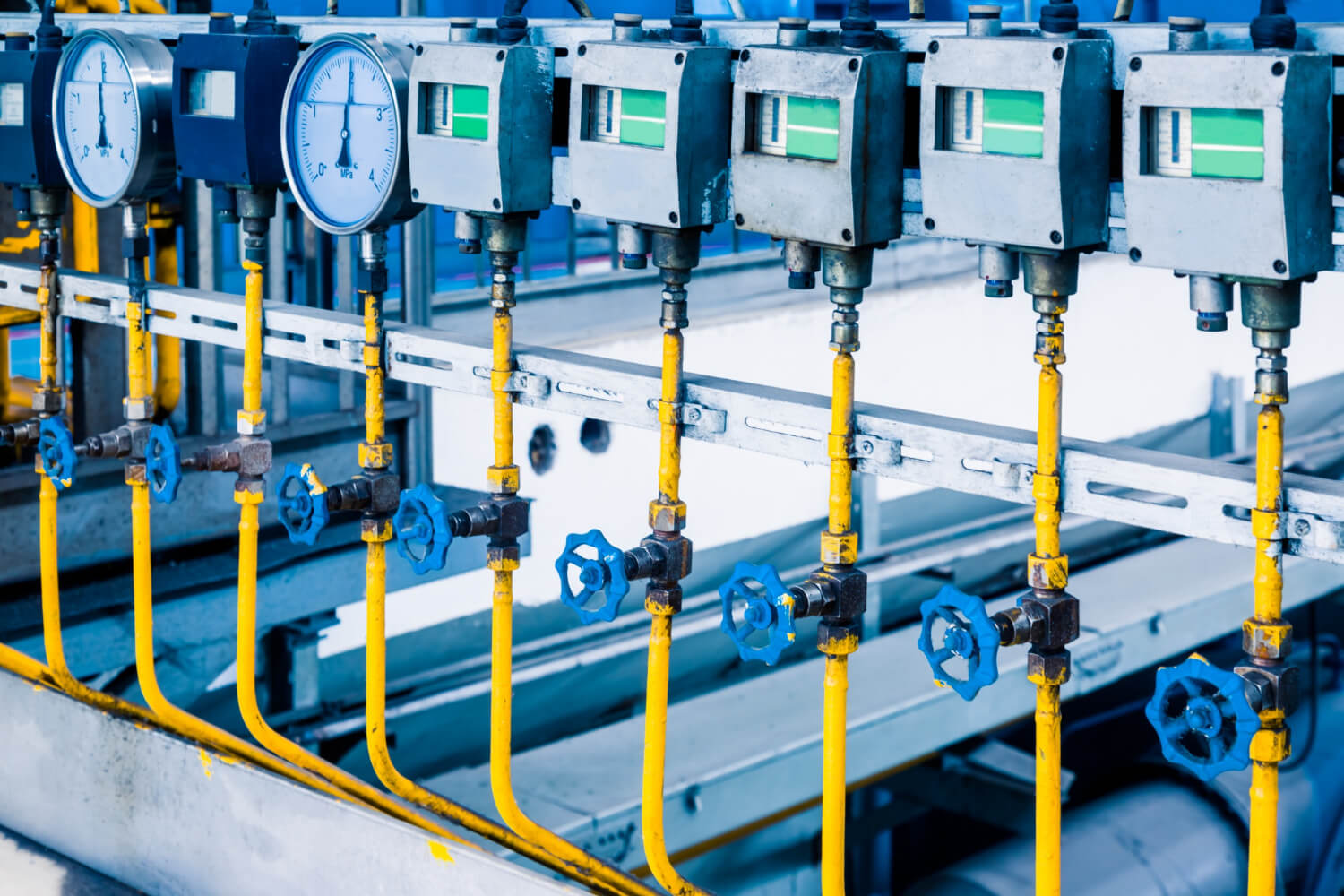
If your plant runs on flow, pressure, temperature, or level, instrumentation is what keeps you informed and in control. Without it, operators are guessing, control systems have nothing to act on, and small process drifts turn into shutdowns, off-spec product, or safety incidents.
Instrumentation, Defined
Instrumentation is the collection of devices used to measure, monitor, and control physical variables in an industrial process. Those variables include pressure, temperature, flow, level, density, viscosity, pH, conductivity, and humidity, among others.
Every instrument has one job: convert a physical quantity into a signal that humans, controllers, or automated systems can read and act on. A pressure transmitter turns 5 bar into a 4-20 mA electrical signal. A radar level sensor turns the position of liquid in a tank into a digital value. A flow meter turns moving fluid into a number that gets logged, billed, or fed into a control loop.
Get the measurement wrong, and everything downstream is wrong with it.
The Process Variables Instrumentation Measures
Process industries care about a small set of variables that, between them, define almost every operation:
- Pressure. Measured by transmitters, gauges, and switches across pipelines, vessels, hydraulic systems, and gas networks.
- Temperature. Measured by RTDs, thermocouples, and temperature transmitters in everything from boilers and reactors to cold storage and HVAC.
- Flow. Measured by Coriolis, ultrasonic, magnetic, turbine, and differential pressure flow meters for water, hydrocarbons, gases, slurries, and hygienic fluids.
- Level. Measured by radar, guided wave radar, hydrostatic, ultrasonic, and capacitance instruments in tanks, silos, and open channels.
- Analytical variables. pH, conductivity, dissolved oxygen, turbidity, and gas composition are measured by analytical sensors in water treatment, pharmaceuticals, and chemical processing.
A modern refinery, brewery, or wastewater plant may have hundreds of these instruments running continuously, every one of them feeding data into a control system.
The Four Categories of Instrumentation
It helps to think of instrumentation as four functional groups working together:
- Sensors and transmitters. The eyes and ears. Sensors detect the physical variable, transmitters convert that detection into a standard signal (4-20 mA, HART, Foundation Fieldbus, Profibus, or wireless protocols).
- Controllers. The brain. PLCs (Programmable Logic Controllers), DCSs (Distributed Control Systems), and SCADA platforms take signals from transmitters, compare them against setpoints, and decide what action to take.
- Final control elements. The muscles. Control valves, actuators, dampers, and variable speed drives carry out the controller’s decision: opening a valve, slowing a pump, shutting down a compressor.
- Indicators, recorders, and HMIs. The display layer. These show operators what the system is doing in real time and store data for analysis, audit, and compliance.
A complete instrumentation loop closes when a sensor reading triggers a controller decision that moves a valve. That’s the foundation of process control.
How Instrumentation Connects to Your Control System
Field instruments don’t operate in isolation. They communicate with PLC, SCADA, and DCS platforms using protocols designed for industrial environments: 4-20 mA analog signals, HART (which carries digital data on top of the analog loop), Foundation Fieldbus, Profibus DP and PA, Modbus, and increasingly Ethernet/IP and wireless options.
Each protocol has its place. 4-20 mA is the workhorse for simple loops. HART adds diagnostics and remote configuration to existing wiring. Fieldbus protocols allow multiple instruments to share a single cable, reducing cost and adding rich diagnostic data. The right choice depends on your plant’s age, control system, and how much diagnostic information your team can act on.
When instrumentation and control systems work together properly, you get closed-loop control, predictive maintenance data, and the audit trail you need for ISO 9001, GMP, custody transfer, and other compliance frameworks.
Where Instrumentation Shows Up Across Industries
Every process industry depends on instrumentation, but the priorities shift:
- Oil and gas. Custody transfer metering, LACT units, wellhead monitoring, refinery process control, and emissions monitoring. Measurement accuracy here translates directly into revenue and regulatory exposure.
- Food and beverage. Hygienic flow, temperature, and level instruments for dairy, brewing, bottling, and CIP (clean-in-place) systems. Sanitation standards drive instrument selection.
- Water and wastewater. Flow meters for distribution networks, level sensors for pump stations, and analytical instruments for treatment plant water quality.
- Pharmaceuticals. Validated instrumentation systems for clean utilities, GMP-compliant calibration, and tight environmental controls.
- Cement and mining. Level instruments for silos, pressure transmitters for pneumatic conveying, and high-temperature instruments for kilns.
- Power generation. Boiler instrumentation, turbine monitoring, and emissions monitoring for thermal, gas, and renewable plants.
The instruments differ in materials, certification, and specification, but the role is the same: keep the operator informed, keep the controller fed with accurate data, and keep the plant safe.
What Goes Wrong Without Proper Instrumentation
Bad instrumentation rarely announces itself. It creeps in through drift, calibration gaps, wrong specification, and aging sensors. The symptoms show up later, and they cost real money:
- Production losses. A failed level transmitter on a critical tank can trip an entire process line.
- Custody transfer disputes. A flow meter reading 1% off in the wrong direction on crude oil at export quietly costs hundreds of thousands of dollars over a year.
- Off-spec product. A drifting temperature transmitter in a reactor or pasteurizer means batches that miss specification.
- Safety incidents. A pressure switch that doesn’t trip is the gap between a normal day and an investigation.
- Compliance failures. Without traceable calibration records, you can’t defend measurements to a regulator, auditor, or customer.
Most of these problems trace back to one of four root causes: incorrect specification, poor installation, missing calibration, or instruments running well past their useful life.
What to Look For in an Instrumentation Partner
If you operate a process facility in Nigeria or anywhere else, instrumentation is too central to the business to treat as a commodity. The vendor you work with should bring four things:
- OEM authorization. Genuine instruments from authorized channels carry valid warranties, real calibration certificates, and access to manufacturer technical support. Greenpeg is an authorized partner for Endress+Hauser, Pepperl+Fuchs, Beamex, and Spirax Sarco, among others.
- Calibration capability. Traceable, documented calibration is what separates an instrument you can defend in an audit from one you can’t. Field and workshop calibration with proper standards, certificates, and as-found/as-left records is the baseline.
- Specification expertise. Choosing the right measurement principle for your fluid, process conditions, and accuracy requirements is harder than picking from a catalog. The wrong Coriolis where a magnetic flow meter belongs, or the wrong radar for your dielectric, will fail in the field regardless of brand.
- Local engineering support. Installation in hazardous areas, integration with your PLC or DCS, commissioning support, and ongoing maintenance all require people who can be on site, not just on email.
Get the Measurement Right, Get Everything Right
Instrumentation is the layer that turns raw industrial processes into managed operations. It’s how you know what’s happening, how you control it, and how you prove it later. The plants that take it seriously run with fewer surprises and more predictable margins.
Greenpeg provides instrumentation specification, supply, installation, calibration, and project management across Nigeria, working with the world’s leading OEMs. If you’re scoping a new project, upgrading an aging plant, or rebuilding a calibration program, talk to our instrumentation team or explore our instrumentation and control services.