How to Use a Digital Multimeter: Best-Practice Procedures for Plant Engineers
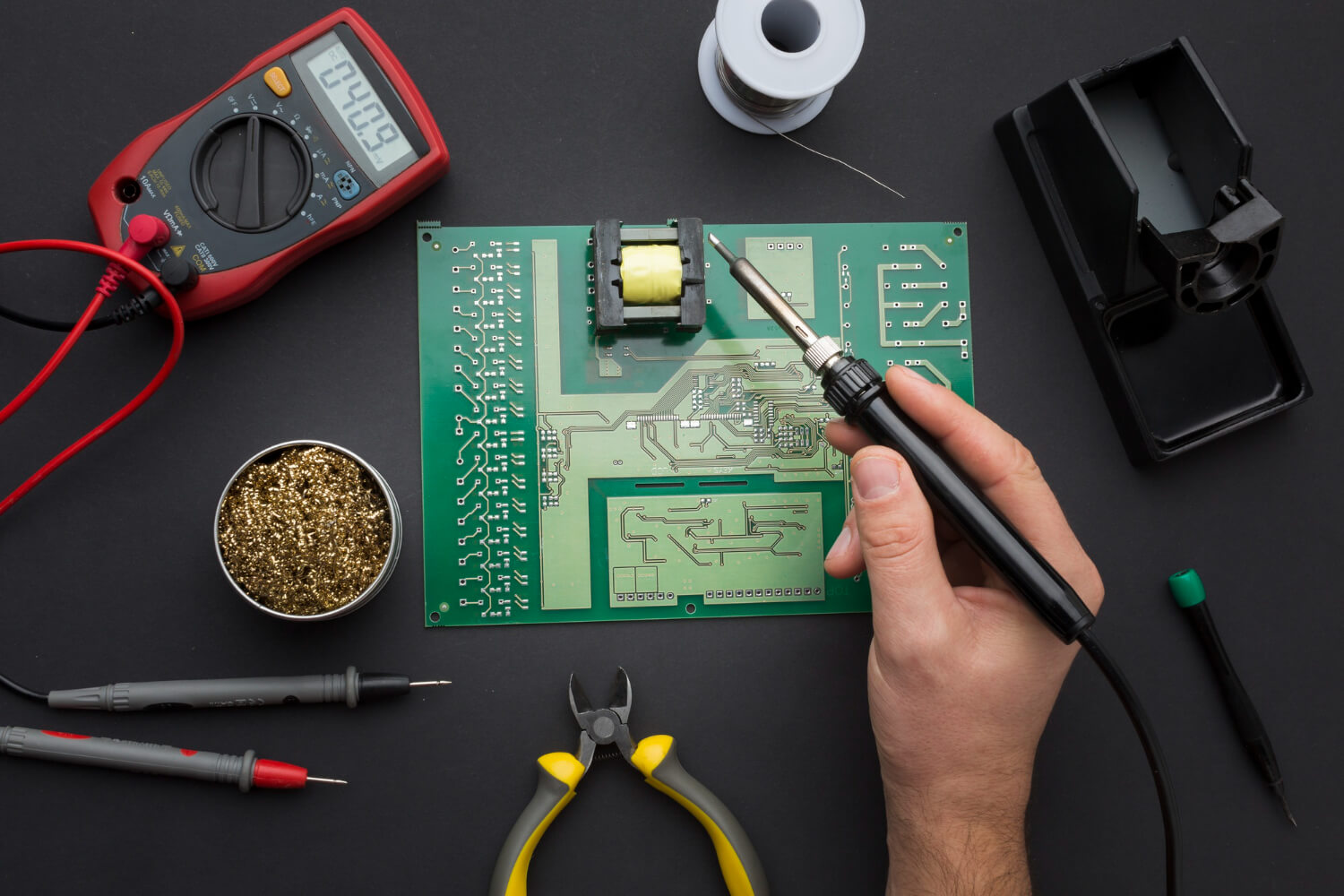
You already know what a digital multimeter measures. The question that decides whether you trust the reading is the procedure: which mode, which reference point, which CAT rating for the environment, and which tool for the current level you’re actually working with.
This guide covers the procedures, not the basics. Each section deals with one measurement category, and the judgment calls that go with it on industrial equipment.
Setting Up the Meter Before Any Measurement
Before the probes touch a circuit, three things need to be right.
Match the CAT rating to the environment. CAT III 600V is the minimum for distribution panels, MCCs, and motor circuits. CAT IV 1000V is required for service entrance work and outdoor utility connections. A CAT II meter has no business on industrial equipment, regardless of voltage.
Run a live-dead-live verification on every “dead” circuit. Test the meter on a known live source, then on the suspect circuit, then back on the known live source. If the meter fails the second live test, the dead reading on the suspect circuit is meaningless, and the lockout is not safe.
Inspect the leads and verify the battery. Cracked insulation or worn probe tips fail in service. A weak battery on some meters returns plausible but wrong readings rather than a low-battery warning, especially on resistance and current ranges.
These three steps take under a minute and catch the failures that lead to incident reports.
Measuring Voltage
Voltage is measured in parallel with the circuit, but the reading depends on the mode, the waveform, and the source impedance. Several common situations produce misleading numbers even when the technique looks correct.
DC versus AC selection. Confirm the dial before connecting. Many false fault calls trace back to AC mode on a DC bus or DC mode on an AC supply.
True RMS for any drive or inverter output. Average-responding meters under-read non-sinusoidal waveforms by 10 to 15 percent. On the output side of a VFD, UPS, or switching power supply, only a true RMS meter gives a defensible number.
Ghost voltages on long disconnected runs. A standard DMM has roughly 10 MΩ input impedance. On a disconnected cable that runs parallel to live conductors, capacitive coupling can show 50V or more on a wire with no real source. Switch to the meter’s low-impedance (LoZ) function, if it has one, or confirm with a solenoid voltage tester before treating the reading as real.
Note the reference point. Phase-to-phase, phase-to-neutral, and phase-to-earth all give different numbers on the same supply. Record which one the reading was taken against, especially when handing the diagnosis to someone else.
Measuring Current
Direct in-series current measurement with a DMM is the right tool for a narrow set of cases on plant equipment. For most industrial work, a clamp meter is the correct instrument.
Use in-series mode for control wiring, instrumentation loops, and low-power DC circuits. Anything below a few amps where you need precision, not bulk reading.
Use a clamp meter for everything else. Motor branch circuits, feeders, panel loads, and any AC above the meter’s mA range. Breaking a live three-phase feeder to insert DMM leads is not a procedure.
The in-series procedure: de-energize the circuit, move the red lead to the correct current jack (mA or 10A), break the circuit at the measurement point, connect the meter in line, restore power, take the reading, and de-energize again before removing the meter.
Watch for the fuse trap. The single most common DMM mistake is leaving the red lead in the mA jack and probing across a voltage source. This blows the meter’s internal current fuse instantly, and on cheaper meters, it can rupture the case. If you are not certain of the current level, start in the 10A jack and step down only if the reading is too low to resolve.
Verifying a 4-20 mA loop. With the loop powered, break the loop at any test point and place the meter in series in current mode. A healthy loop reads between 4 and 20 mA. Anything outside that range points to the transmitter, wiring, or loop power supply.
Measuring Resistance and Continuity
Resistance and continuity modes apply test current from the meter itself. They give correct readings only when the circuit is de-energized, and the device under test is isolated from parallel paths.
De-energize, discharge, then verify with voltage mode before switching the dial to ohms. Stored charge on capacitors and inductors will damage the meter and inject voltage onto the circuit.
Isolate at least one end of the device. A resistor or coil measured in-circuit reads whatever the parallel paths add up to, not the component’s actual value. For motor windings, lift one end of each phase before reading.
Continuity is a workflow tool, not a precision measurement. The audible beep is a time-saver. Use it for fuse checks, cable tracing, contactor pole verification, and pinpointing breaks. Don’t use the resistance number from continuity mode for anything quantitative.
A DMM does not measure insulation resistance. A standard meter applies a fraction of a volt. Insulation testing on motors, cables, and transformers requires 500V, 1kV, 2.5kV, or 5kV from a dedicated insulation tester. A “good” reading from a DMM on a winding tells you the winding is intact. It tells you nothing about whether the insulation will hold under operating voltage. For that, use a Megger insulation tester, which is what the brand was originally built for.
Using the Specialty Functions
These functions are occasional on plant work, but when you need them, no other handheld tool is faster.
Diode test reads forward voltage drop on silicon devices. A working diode shows roughly 0.5 to 0.7V in the forward direction and an open circuit in reverse. The same test works on bridge rectifiers, freewheeling diodes, and the body diodes inside IGBT modules, with the device de-energized.
Capacitance is useful for motor run capacitors and starter capacitors. Discharge the capacitor first, then measure across its terminals. Compare against the printed rating; more than 10 percent deviation is a replacement.
Frequency confirms the output of a VFD, the speed of a generator, or the stability of the mains supply. Useful when commissioning drives or chasing generator hunting.
Temperature, with a K-type thermocouple plugged into the meter, turns the DMM into a contact thermometer. Useful for spot-checking motor casing temperature, panel hot spots, and process surface temperatures without pulling out a separate instrument.
Common Plant Diagnostic Workflows
Most DMM work in a process facility falls into a small set of repeating workflows. Doing them in the right sequence saves callbacks.
4-20 mA loop verification. Check the loop power supply with voltage mode, the loop current with in-series current mode at any open test point, then the loop wiring resistance with the loop de-energized. Three readings tell you whether the problem is the transmitter, the wiring, or the power supply.
Motor winding check. Phase-to-phase resistance across U-V, V-W, and W-U should match within a few percent on a healthy three-phase motor. Phase-to-ground reads open on a DMM, which proves nothing useful about insulation. The next step on a suspect motor is an insulation test.
Three-phase voltage balance. Phase-to-phase readings on a healthy supply should match within about 1 percent. An imbalance above 2 percent points to a loose connection, a single-phase load on the bus, or a source-side problem.
Fuse, contact, and isolator verification. Continuity mode confirms in seconds whether a fuse is intact, a contactor pole is closing, or an isolator is making contact properly. Faster than reading resistance and easier to interpret.
Control circuit fault tracing. Voltage measurements at successive points along a 24V control loop locate the broken contact, open coil, or failed switch. Start at the source, work toward the load, and stop where the voltage disappears.
Choosing the Right DMM for Plant Work
A DMM is only as trustworthy as its specification, its calibration, and the brand’s support behind it. Four things matter more than headline features.
True RMS, not average-responding. Anything else under-reads on drive outputs and modern industrial waveforms.
CAT III 600V or CAT IV 1000V rating. Required for any panel, MCC, or distribution work.
IP rating that matches the site. Plant floors, outdoor switchyards, and processing areas need ingress protection that survives dust, splash, and washdown.
A brand with local calibration and parts support. A meter with no calibration path is not auditable, which means readings from it cannot be defended.
For most industrial maintenance work, the Megger AVO 410 covers general electrical and instrumentation tasks. The Megger AVO 835 adds higher accuracy and additional ranges for more demanding plant environments. For currents above the in-series range, the Megger DCM340 clamp meter avoids breaking circuits. For quick voltage verification on switchgear, the Megger TPT320 covers 12 to 690V.
Greenpeg is the authorized Megger distributor in Nigeria, supplying genuine instruments with valid calibration certificates and manufacturer warranties. We also supply test and measurement equipment from other OEM partners for specialized industrial applications.
Get the Right Meter, Get the Right Reading
The meter does most of its real work in the choices around it. The right CAT rating for the environment, the right mode for the waveform, the right tool for the current level, and the right reference point for what you’re trying to prove. Get those consistent, and the readings stop disagreeing with each other.