Why Your Production Line Keeps Stopping — And Why a Rotary Valve Is the Answer
There is a fault that shows up repeatedly in Nigerian food, pharmaceutical, chemical, and cement plants. The production line stops. The maintenance team investigates. And after hours — sometimes days — of troubleshooting, the problem traces back to a single component that most engineers walk past without a second thought.
The rotary valve.
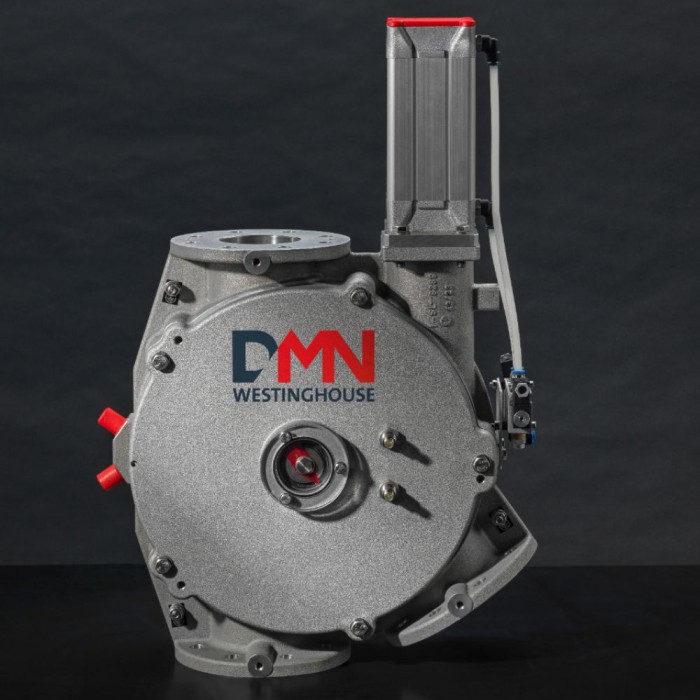
It is not the most discussed piece of equipment in any plant. It does not carry the visibility of a PLC, the complexity of a SCADA system, or the scale of a conveyor belt. But in any operation that handles dry bulk materials — powders, granules, pellets, or solids — the rotary valve is one of the most operationally critical components in the entire process line.
When it works correctly, nobody notices. When it fails, everything stops.
What a Rotary Valve Actually Does
A rotary valve, sometimes called an airlock or rotary feeder, is a device installed at the outlet of hoppers, silos, cyclones, bag filters, and conveying lines. Its job is to control the flow of dry bulk material from one section of a process to the next, while simultaneously maintaining a pressure seal between sections operating at different pressures.
In a pneumatic conveying system, for example, the rotary valve sits between the atmospheric pressure of a storage hopper and the pressurised conveying line. It must meter the material precisely, feeding it into the conveying airstream at a consistent rate — while preventing air from leaking back up into the hopper.
This dual function material metering and pressure sealing is what makes the rotary valve both indispensable and, when poorly specified or maintained, a significant vulnerability.
Why Rotary Valves Fail — And What It Costs
The most common rotary valve failures in industrial plants follow a predictable pattern:
Air leakage and pressure loss. As rotor tip clearances increase through wear, air begins to bypass the valve and flow back into the feed hopper. This reduces conveying efficiency, causes material bridging, and increases energy consumption. In fine powder applications, it can result in dust escape and product contamination.
Material jamming and rotor seizure. Incorrectly specified rotor clearances, wrong material selection, or the introduction of tramp material can cause the rotor to seize inside the valve body. This is one of the most common causes of unplanned production stops in food and pharmaceutical plants.
Product degradation in applications handling fragile products, such as fish feed pellets, pharmaceutical tablets, and plastic granules, a poorly designed rotor breaks or degrades the product during every rotation. The damage accumulates silently until quality failures appear downstream.
Hygiene failures in food, dairy, and pharmaceutical plants, a rotary valve that cannot be properly cleaned, is a contamination risk. Many older or incorrectly specified valves require significant disassembly time and still leave product residue in dead zones — creating conditions for bacterial growth and cross-contamination between batches.
Each of these failure modes carries a cost. Unplanned downtime, product waste, quality rejections, energy losses, and maintenance hours — in many Nigerian plants, these costs run into millions of naira annually, often traced back to a component that costs a fraction of that figure to replace correctly.
The Right Rotary Valve for the Right Application
The most important decision in rotary valve specification is matching the valve design to the material being handled and the process conditions it will operate in. There is no universal rotary valve — and specifying the wrong type is the single most common cause of the failures described above.
Here is a practical guide to the primary configurations:
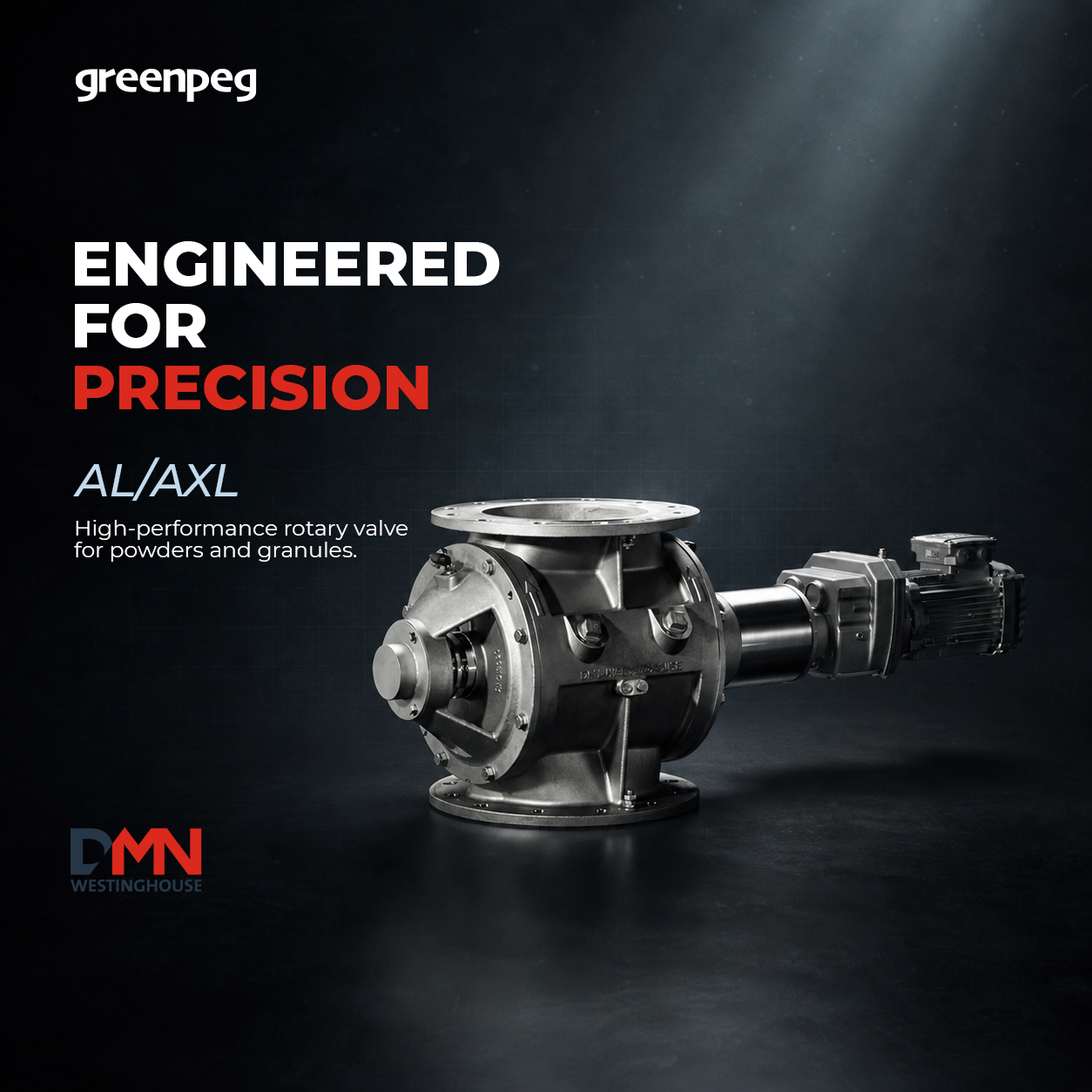
Drop-Through Rotary Valves: The standard configuration for most powder and granule handling applications. Material drops by gravity through the valve rotor and exits at the bottom. Suitable for free-flowing, non-abrasive materials in standard conveying pressures. The DMN Westinghouse AL and AXL are the industry benchmark in this category — offering minimal air leakage, high filling efficiency, and modular design for multiple configurations.
Blow-Through Rotary Valves Designed specifically for pneumatic conveying systems where material must be entrained in an airstream as it passes through the valve. The conveying air flows directly through the valve body, carrying material with it. This design is advantageous for lightweight or fine powders that require assistance to move effectively. The BL and BXL series from DMN Westinghouse are purpose-built for these demanding conveying applications.
Hygienic Rotary Valves For food, dairy, and pharmaceutical operations, standard rotary valves are not sufficient. Hygienic variants feature polished internal surfaces, FDA-approved seals, tool-free disassembly for cleaning, and compliance with international food safety standards, including USDA Dairy and EC1935/2004. The DMN Westinghouse MZC series — opening on one side (MZC-I) or two sides (MZC-II) sets the global standard for cleanability and hygiene compliance in bulk solids handling.
Medium-Duty Rotary Valves For less demanding applications, general powder handling, big bag unloading, cyclone discharge, medium-duty valves offer a cost-effective solution without over-engineering the specification. The DMN Westinghouse MALD and MLD are the recommended choice here.
Dust Lock Rotary Valves Specifically designed for filter applications — bag filters, cyclones, and dust collectors. The valve must discharge collected dust continuously while maintaining the pressure differential of the filtration system. The DMN Westinghouse DL dust lock is engineered for exactly this purpose, with a shear angle inlet that minimises bridging and ensures consistent discharge.
Where to Source the Right Rotary Valve in Nigeria
DMN Westinghouse rotary valves are available in Nigeria through Greenpeg Engineering, the official authorised distributor, listed directly on DMN Westinghouse’s global distributor network.
Greenpeg Engineering’s technical team can assist with full application specification, matching the right valve model, rotor design, material build, and seal specification to your exact process conditions, as well as supply, installation, commissioning, and ongoing maintenance support.
With over 15 years of experience in industrial engineering across Nigeria’s food, pharmaceutical, chemical, cement, and process industries, Greenpeg Engineering brings both the product and the application knowledge needed to get the specification right the first time.